











You’ve got a tattoo idea and a whole city of shops to get it done at. The good news is that St. Louis has a deep, genuinely talented tattoo scene, so you can afford to be choosy. The trick is knowing what to be choosy about, especially if this is your first tattoo. Cleanliness and licensing matter, but in any real shop those are a given, the baseline, not the thing that sets one place apart. What actually separates a tattoo you love from one you just tolerate is quieter: whether the artist’s work fits your idea, and whether the shop treats you like a person while it’s happening. Here’s how to find the right one.
Tattoo shop safety: the non-negotiable baseline
Let’s get the table stakes out of the way, because you should demand all of it and then stop thinking about it.
Any tattoo shop in St. Louis worth walking into will use single-use, sterile needles, change gloves between clients, run an autoclave to sterilize anything reusable, and keep clean, separated work surfaces. In Missouri, tattoo artists and the establishments they work in are required to be licensed by the state, and a shop should have no problem showing you that. A shop that goes a step further and spore-tests its autoclave (a regular check that confirms the sterilizer is actually killing everything, not just running warm) is one taking safety seriously past the bare minimum.
If a place can’t or won’t show you its license and confirm single-use needles, leave. No debate. But here’s the thing: once a shop clears that bar, so does basically every other decent shop in town. Clean and licensed doesn’t tell you which one is right for you. That decision starts now.
What actually matters: how a tattoo shop treats you
Walk into ten tattoo shops and you’ll feel the difference in about four seconds. Some places make you feel like you wandered into a private club and forgot the password. Nobody looks up. The energy says you should already know what you want, already know the lingo, and definitely not ask how much it costs.
That’s the thing to screen for, and it’s the thing the checklists ignore. A tattoo is permanent and personal, and you’re allowed to have questions about it. The right shop makes you feel like the questions are normal, because they are.
When you visit or message a shop, pay attention to a few things:
- Do they greet you like a person? Or do you feel like you’re interrupting something? First impressions here are real data.
- Can you ask a “dumb” question without getting a look? Try one on purpose. “I don’t really know what I want yet, can you help me figure it out?” The answer tells you everything.
- Do they talk about price like it’s a normal thing to discuss? Money anxiety keeps a lot of people from ever booking. A good shop names ranges, explains what drives cost, and doesn’t make you feel cheap for asking.
- Is there ego in the room? Confidence is great. Condescension is not. You want artists who are proud of their work and still kind to the nervous person in front of them.
You’re not being picky. You’re choosing who gets to put something permanent on your body, and you deserve to feel comfortable doing it.
How to judge a tattoo artist’s portfolio
A shop’s vibe gets you in the door. The tattoo artist portfolios tell you if they can actually do your tattoo.
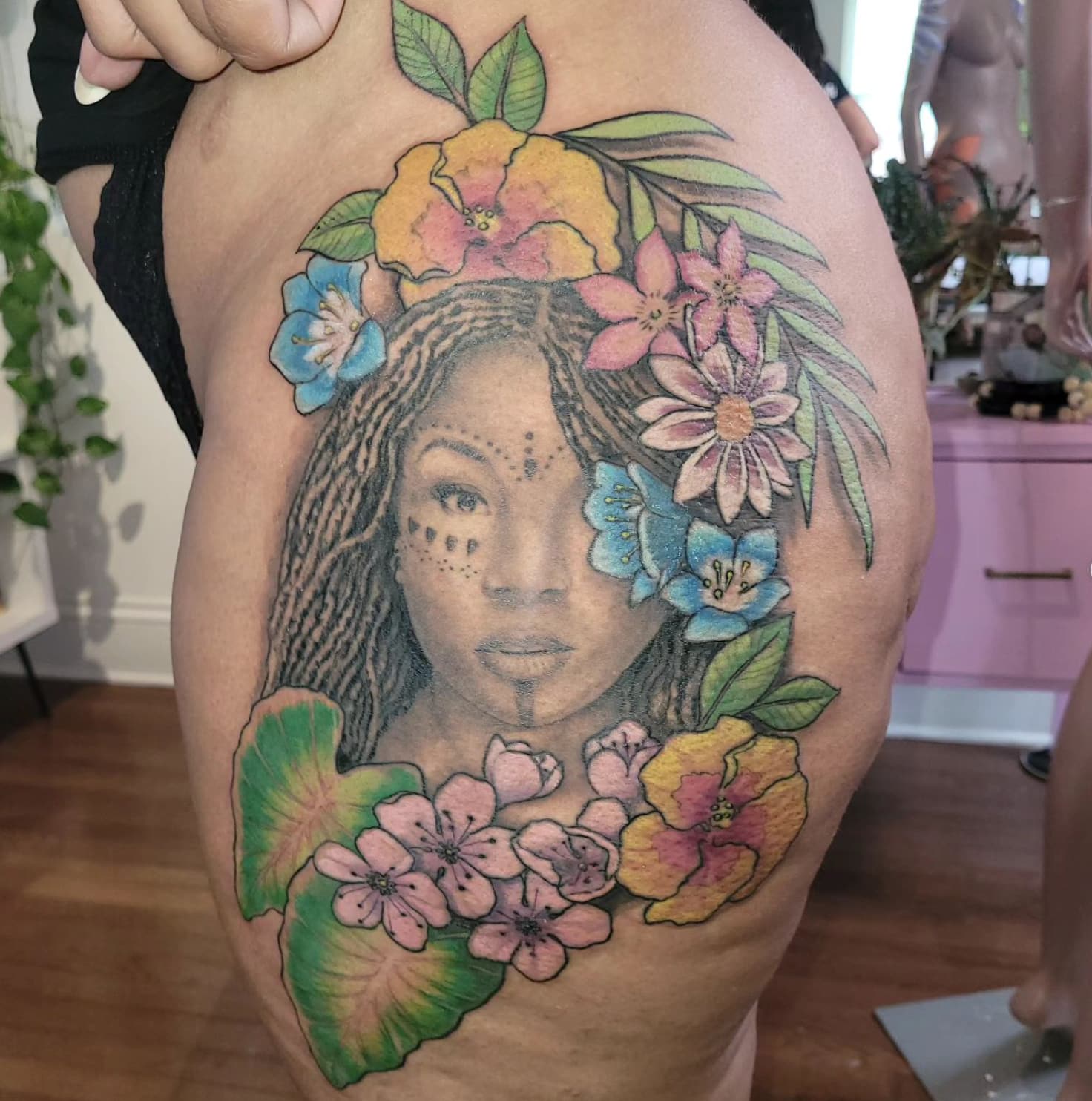
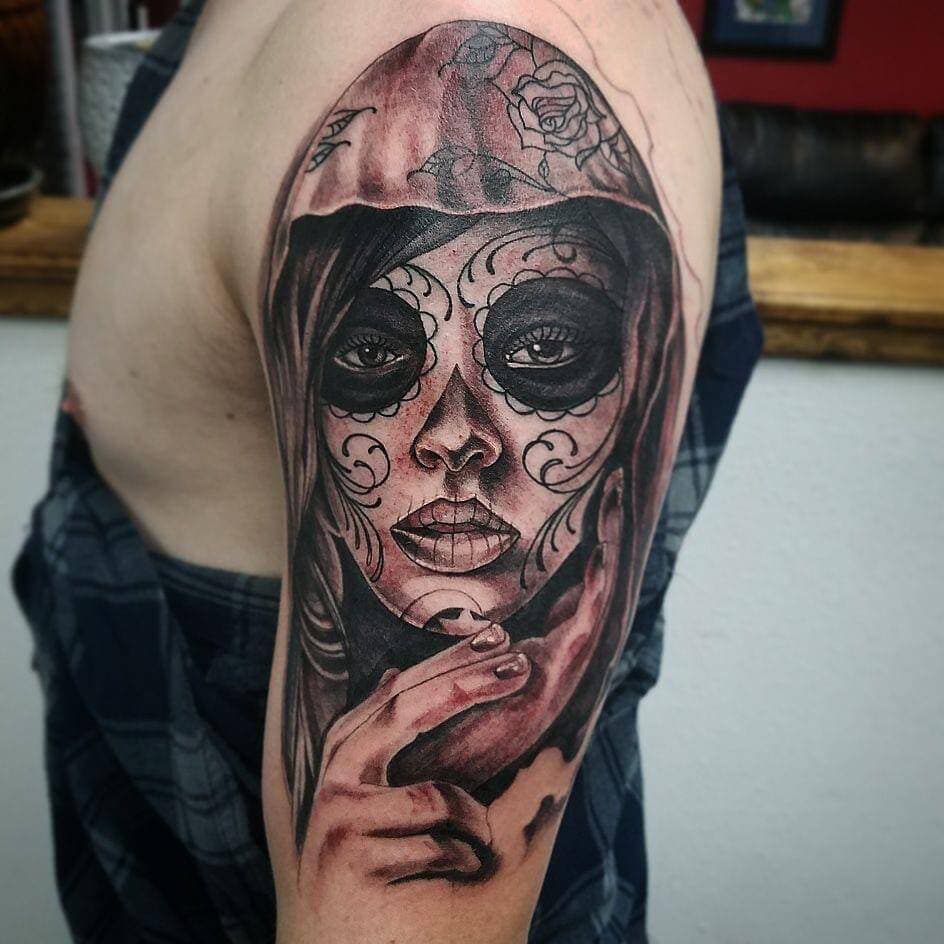
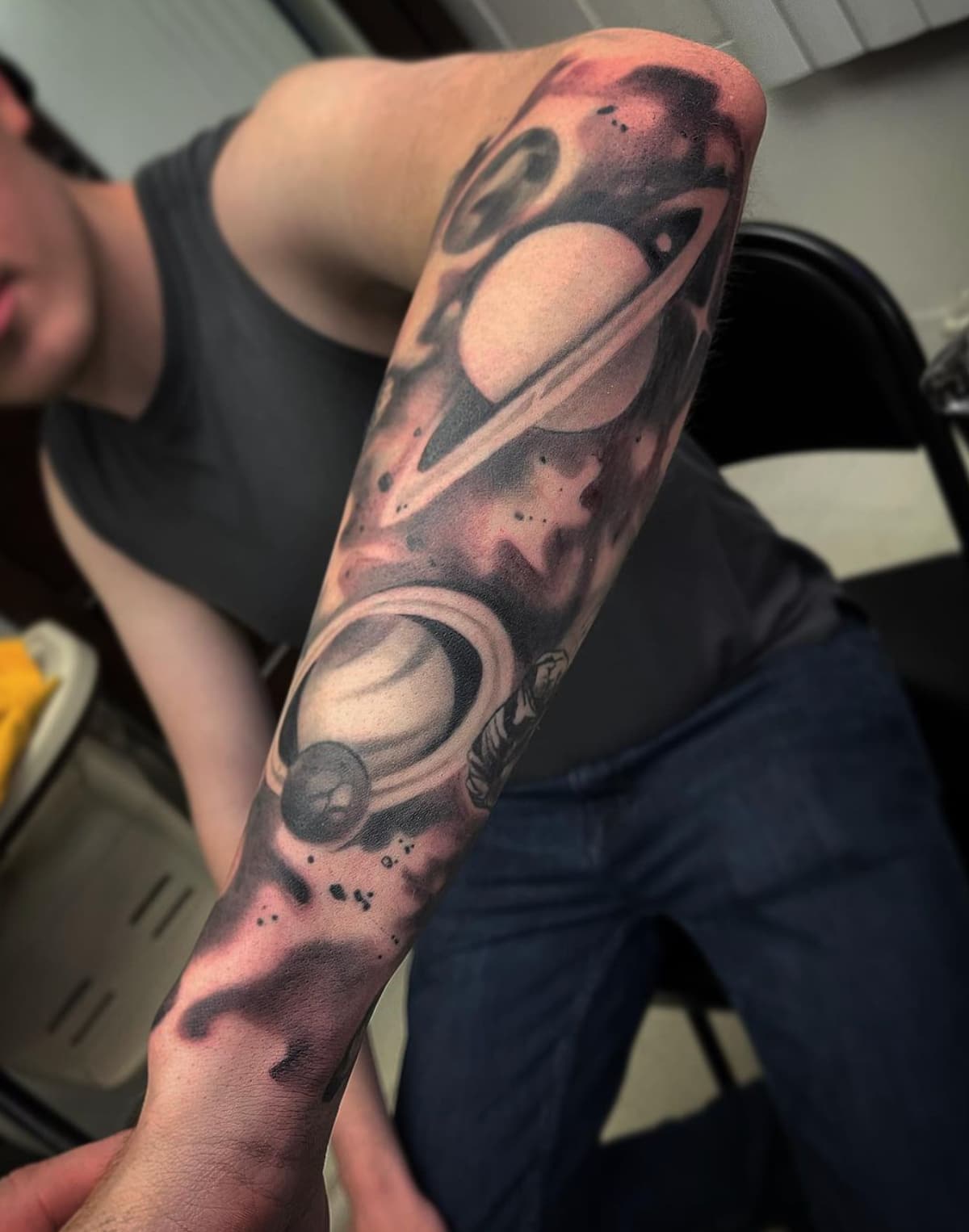
When you look at an artist’s work, look for healed photos, not just fresh ones. Anything looks crisp the day it’s done. Healed work shows you how the lines hold up and how the color settles after a few weeks. Check for clean, consistent line work and smooth, even shading. And look at range within a style, not just one lucky piece.
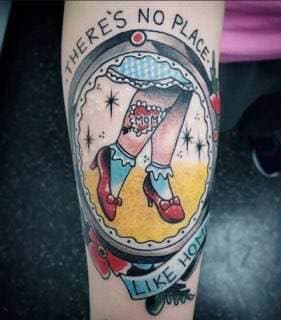
Then match the artist to your idea. Tattooing has a variety of styles, and most artists have ones they’re great at and ones they don’t really do. Fine line, realism, traditional, blackwork, color work, Japanese, lettering. If you want delicate fine-line script, you want someone whose portfolio is full of delicate fine-line script, not a traditional bold-line specialist having an off day. A shop with a deep bench is an advantage here, because you can get matched to the right artist instead of forcing your idea onto the only person available.
How to read tattoo shop reviews
Google reviews and word of mouth are useful, with a little nuance. Don’t just look at the star rating. Read what people actually say. Are they talking about feeling comfortable, being listened to, the shop being clean, the healing going well? A pile of reviews that mention the experience, not just the art, is a strong signal. Local recommendations from friends who got work they love are gold, and St. Louis is a small enough scene that good and bad reputations both travel.
How much tattoos cost in St. Louis
Pricing makes people anxious, so let’s just talk about it.
Tattoo pricing usually works one of two ways: a shop minimum for small pieces (often somewhere around $100 in this market), and then either an hourly rate or a flat project price for bigger work. Rates in St. Louis are generally more reasonable than what you’d pay in a coastal city, but cheap should never be your top filter. This is permanent. A bargain tattoo you don’t love, or one that needs fixing later, costs more than doing it right the first time.
For larger work, sleeves, tattoo cover-ups, and memorial pieces, expect to talk about it as a project: a consultation, a deposit, and one or more booked sessions. That’s not a shop being fussy. Planning is what separates a great big tattoo from a regretful one. A shop that’s transparent about how pricing works, and reframes it as lifelong value instead of dodging the question, is treating you like an adult.
Visit the shop and book a consultation
If you can, visit before you book. A shop visit answers things a website can’t. Is it actually clean and bright, or just well-photographed? Are the artists pleasant in person? Do you feel calmer or more anxious after ten minutes there? For bigger work especially, a free consultation is the best possible test drive. You get to bring your idea, see how they respond to it, and find out whether they listen or just nod and reach for a needle. The consult is where you learn whether a shop is right for you, before anything is permanent.
The St. Louis tattoo scene, by neighborhood
St. Louis has a genuinely good tattoo community, spread across neighborhoods like Cherokee Street, The Grove, South Grand, the Delmar Loop, and out into Maplewood. There are talented artists all over this city, which is good news for you: you can afford to be choosy, and you should be. Choosing local also means you can do the in-person visit, build a relationship for future work, and lean on local word of mouth.
Why choose Enigma Tattoos in St. Louis
We’ll be straight with you about who we are, because that’s sort of the whole point of this guide. Enigma is the tattoo shop in the Loop built around the experience as much as the art. The clean, bright, licensed, single-use, spore-tested baseline is all there, because of course it is. What we actually care about is that you don’t feel judged, rushed, or talked down to, whether it’s your first tattoo or your fiftieth. We greet you like a person, we walk you through every step, we show you the design on your body before the needle touches skin, and we’ll happily talk price without making you feel weird about it.
We’ve also got a deep bench of experienced artists across every major style, so we can match you to the right person instead of the only person. And we’re proud that St. Louis Post Dispatch’s STL Headliner named us Best Tattoo Shop in St. Louis in 2025, because an outside nod to the thing we work hardest at means something.
If you’re choosing a shop in St. Louis and you want the version where you actually feel taken care of, book a free consult with us. No pressure, no commitment. Bring your idea, ask your questions, and see how it feels. That last part, how it feels, is the whole decision.
1 thought on “How to Choose a Tattoo Shop in St. Louis”