











A cover-up isn’t damage control. It’s some of the hardest custom work in tattooing, and when it goes right, the new piece is better art than whatever it replaced. That’s the standard we hold this work to at our St. Louis tattoo shop in the Delmar Loop.
So if you’ve got a tattoo you’ve quit looking at in the mirror, an ex’s name, a rushed piece from a beach trip, something that healed rough, you’re not stuck with it. You also might not be a candidate for the exact design you’ve got in your head, and we’d rather tell you that during a free consultation than after the needle is running.
- Mon – Thurs: 12pm – 9pm
- Friday – Sat: 12pm – 10pm
- Sunday: 12pm – 8pm
Weekdays are typically less busy. Weekends can fill up fast. Call ahead if you want to check artist availability, or just show up and we’ll let you know the wait time.
Is Your Tattoo Coverable? What to Know Before You Book
Nearly any tattoo can be covered. The harder question is what it can be covered with, and that comes down to a few things an artist has to see in person before promising you anything.
Ink density is the whole game. Old ink doesn’t get erased by new ink. It gets buried. For that to hold up, the new work has to sit darker and denser than what’s underneath, or the original starts showing through as the piece settles. Artists call those leftovers ghosting, or peekers. They tend to turn up months later, once the fresh work has softened and the swelling is long gone, which is exactly when nobody wants to find them.
Expect the new design to be bigger. A cover-up generally needs to run two to three times the footprint of the original so there’s room to wrap, redirect, and hide the old shapes inside new ones. Small tattoo, small solution rarely works. Hard edges, block lettering, and heavy black outlines are the stubborn parts, because straight lines are easy for the eye to find inside a new design.
Age, placement, and skin condition matter too. A faded ten-year-old piece gives an artist far more room than something saturated last spring. Scar tissue, blowouts, and raised keloid take ink unevenly, so those areas may need a different approach or a lighter hand. Fingers, hands, and feet hold ink poorly to begin with, which limits what’ll still look clean in five years.
None of this is meant to talk you out of anything. It’s the same list your artist runs through out loud with you, so you get to hear the reasoning instead of just a yes or a no.
Cover-Up Tattoo Ideas That Actually Work
Most cover-up idea lists are just photos. The useful filter is narrower: a cover-up design needs saturation, contrast, and enough give in the composition to move around whatever is already on your skin. Below are the directions that consistently deliver all three. Our tattoo artists each keep portfolios worth going through before you settle on one.
Blackwork and Blackout Cover-Ups
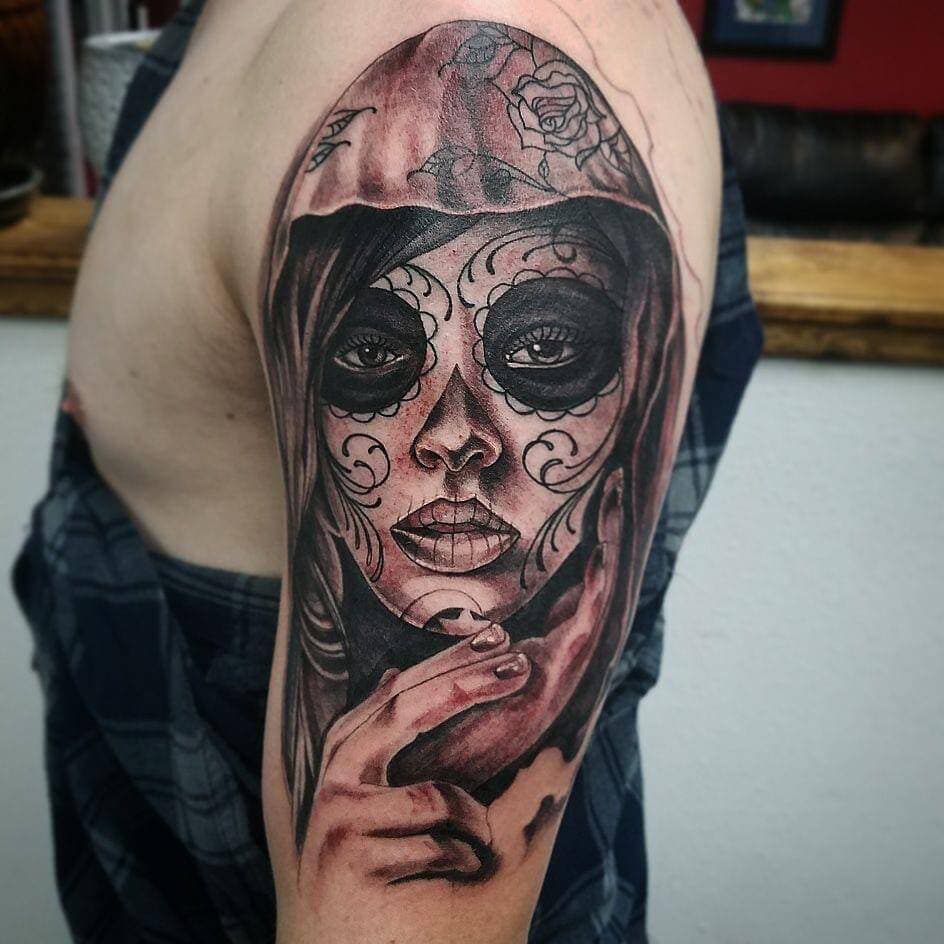
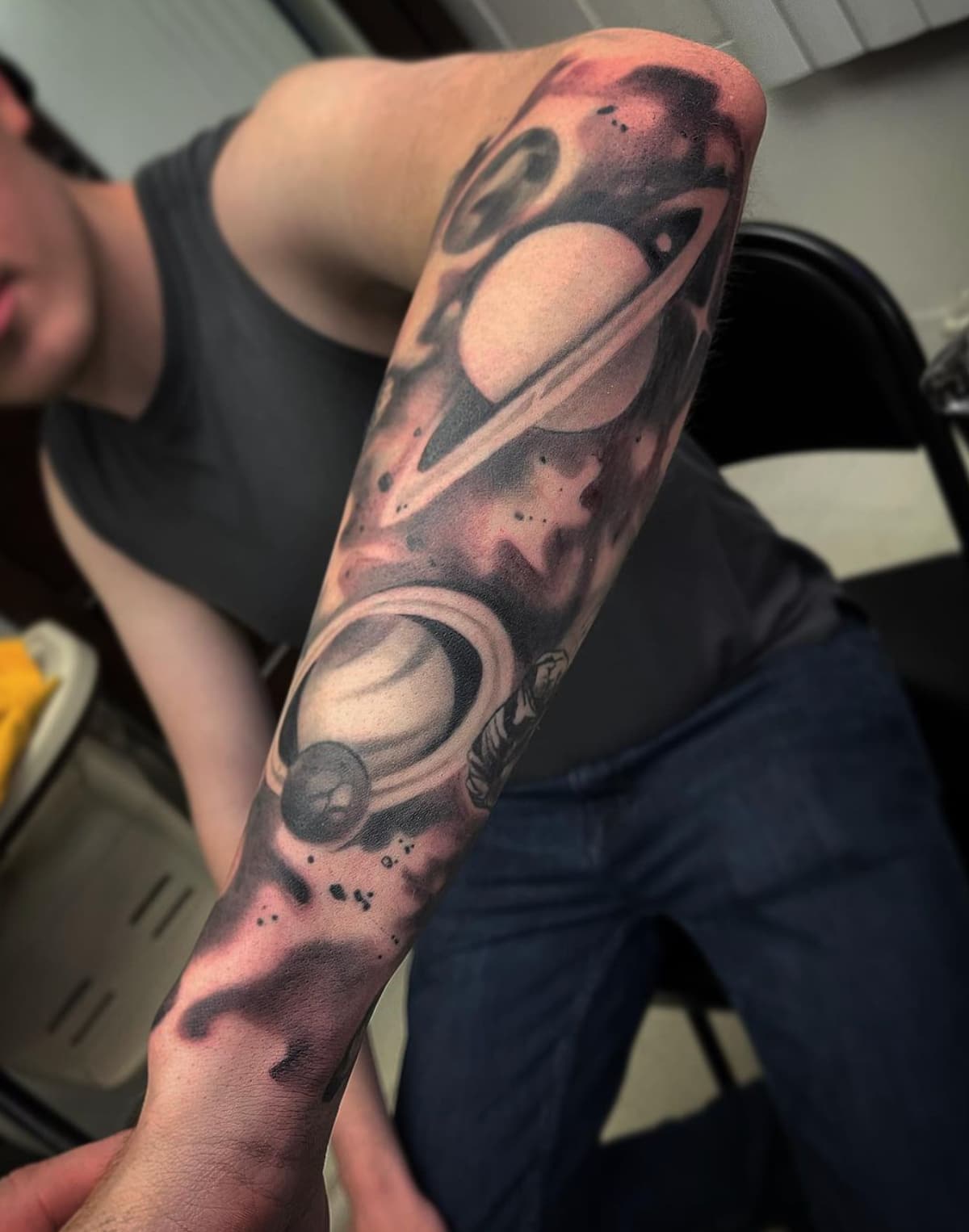
Nothing buries old ink like solid black. Blackwork gives an artist the heaviest saturation available, which makes it the reliable answer for dark, dense, or already-covered tattoos that lighter styles can’t touch. Full blackout takes the idea to its conclusion, filling a whole panel of skin and leaving negative space to work back into later. It’s a serious commitment and not the right call for everyone, though it solves problems no other approach can.
American Traditional Cover-Ups
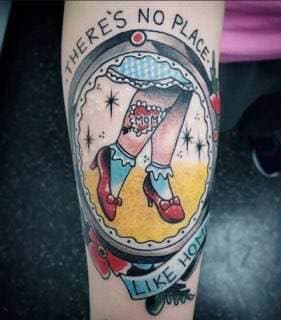
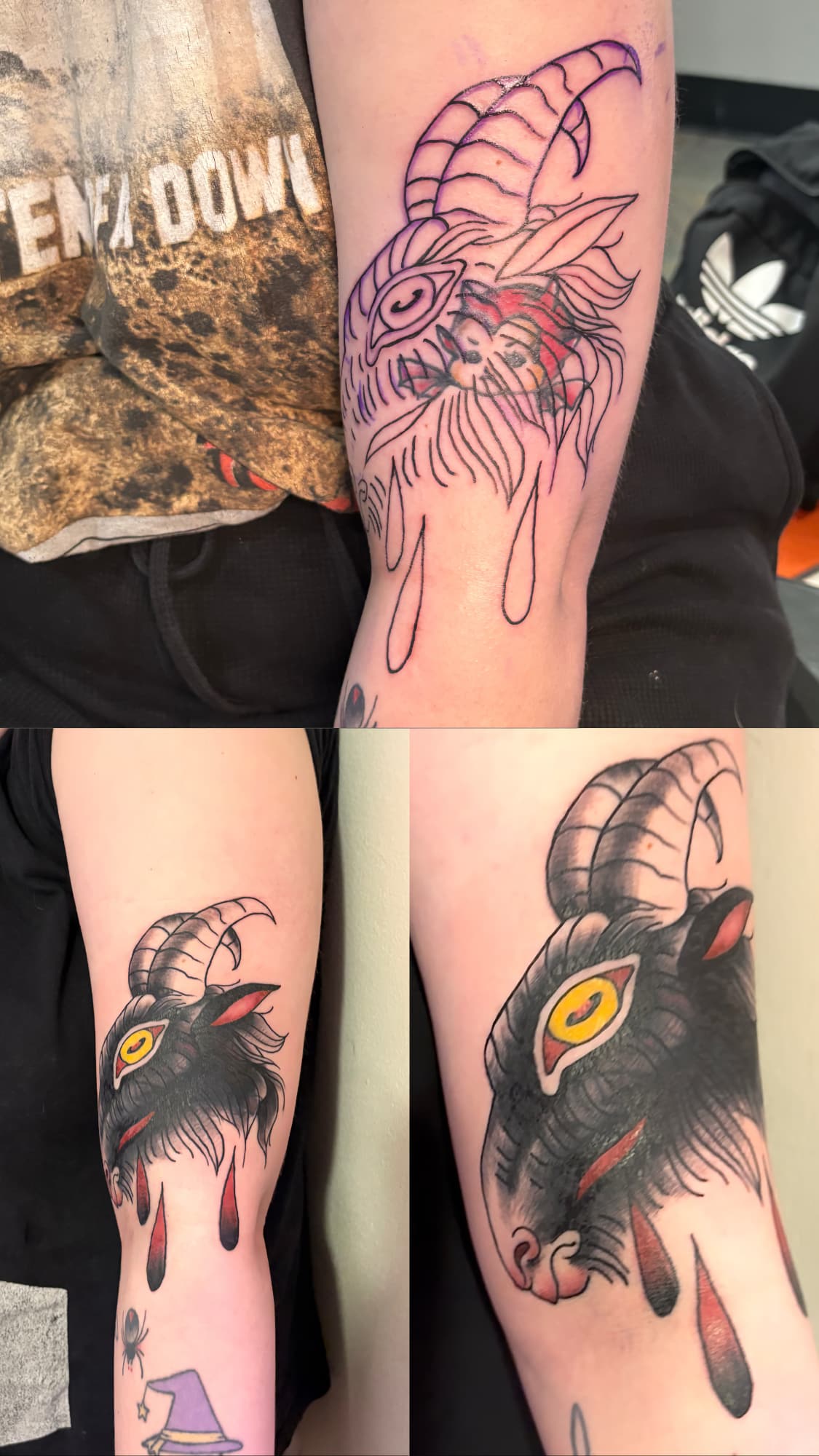
Bold outlines and packed color, built for contrast. American traditional was practically made for this job, and shops have been using it to fix old work for a century. Thick black linework swallows the edges of an old design, and solid fills of red, green, and black cover far better than any soft shading. Panthers, roses, daggers, and eagles are classics here for a practical reason: their shapes are big and forgiving.
Japanese Traditional Cover-Ups
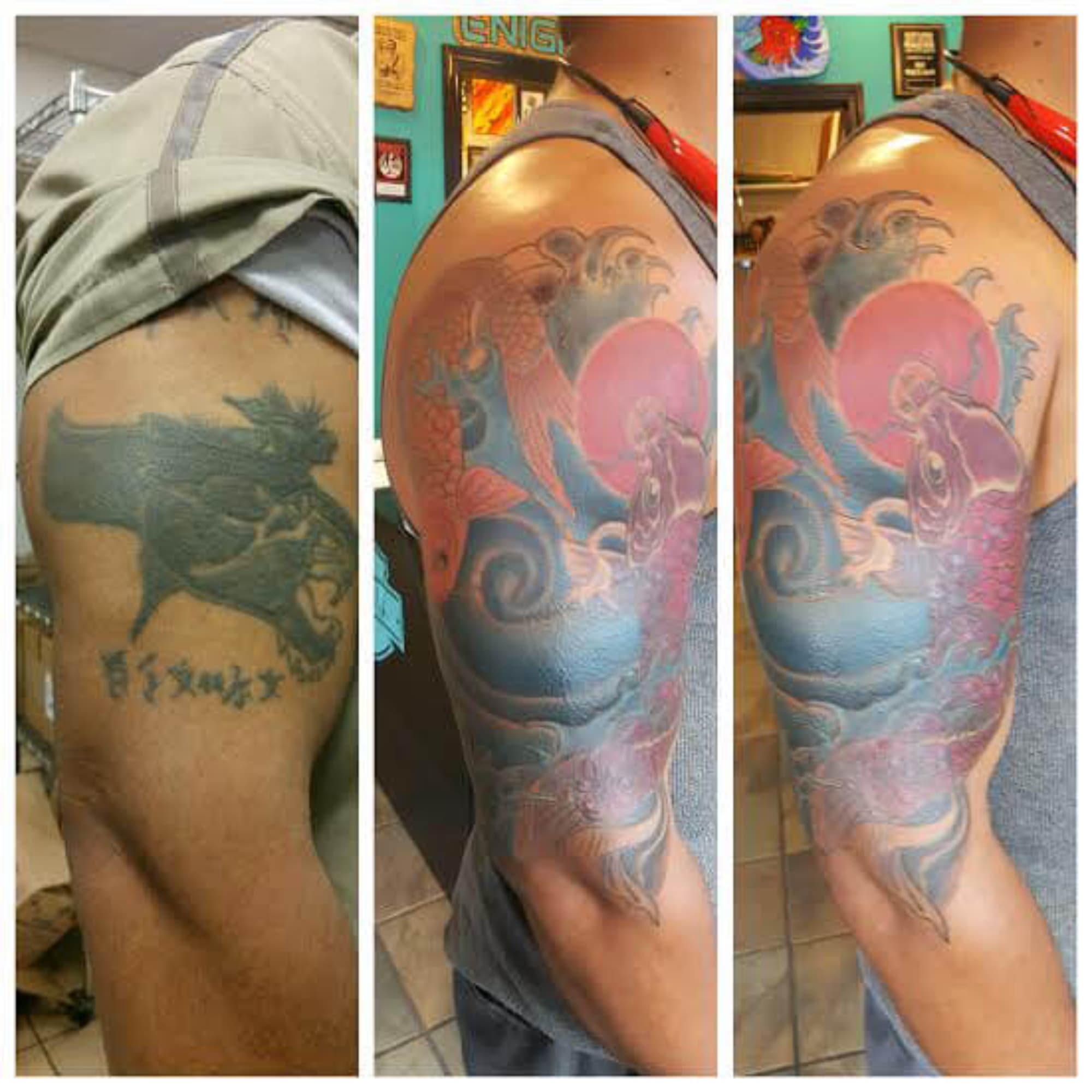
Scale and flow are what Japanese traditional brings to a cover-up. Waves, wind bars, clouds, and foliage act as background that can be shaped around an old tattoo without looking like it’s hiding something, while a koi, dragon, or hannya lands as the focal point wherever coverage needs to be heaviest. For anyone with several old pieces scattered across an arm or a back, this style pulls them into one composition better than anything else.
Tribal Cover-Ups
Dense black pattern, strong shapes, and no dependence on fine detail make tribal work a practical choice over dark ink and scarred skin. The flowing forms follow muscle and limb, so an artist can route the design to sit heaviest exactly where the old tattoo is most saturated. It ages well too, since there’s no delicate line work to blur over the years.
Nature, Florals, and Animals
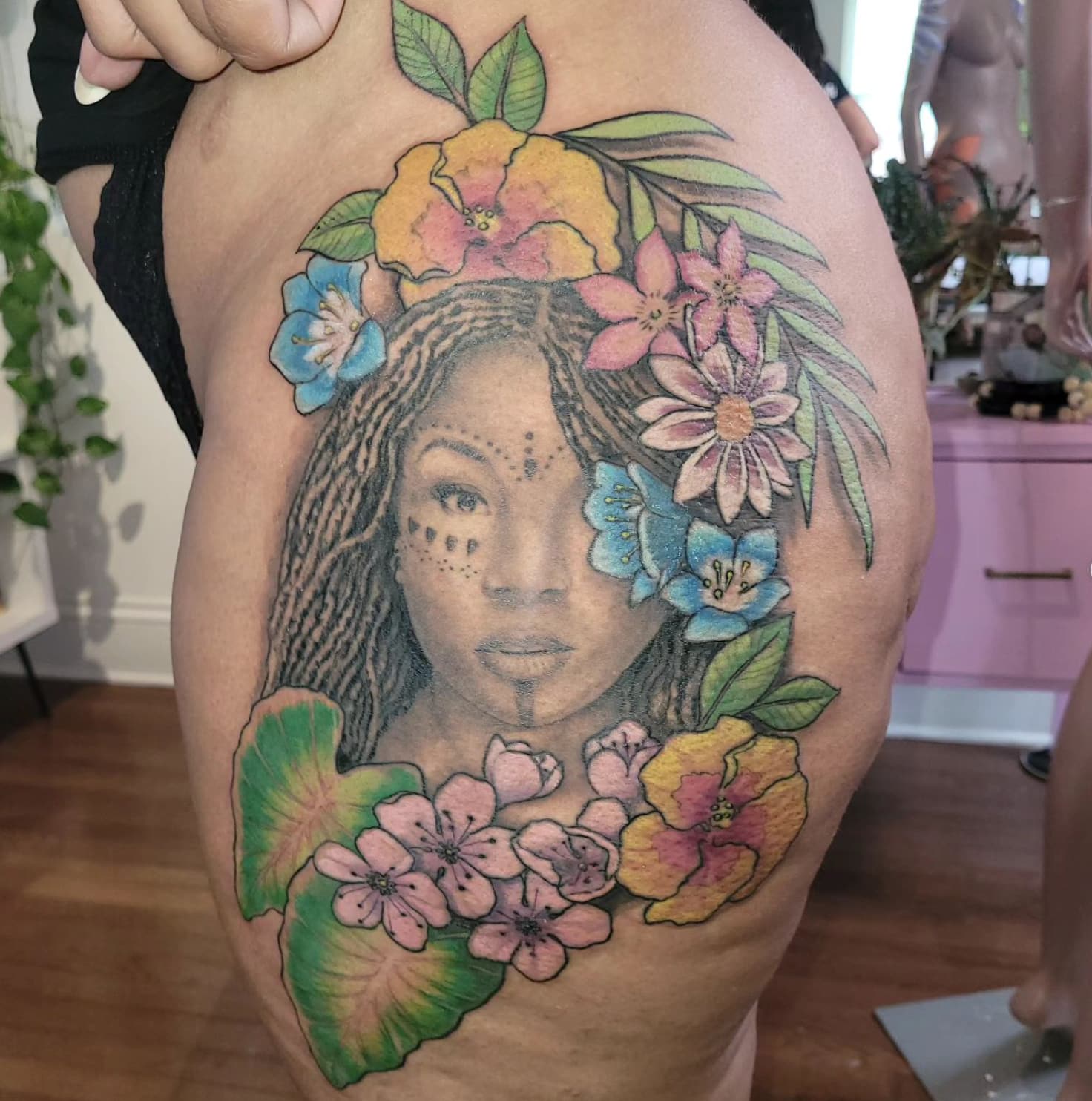
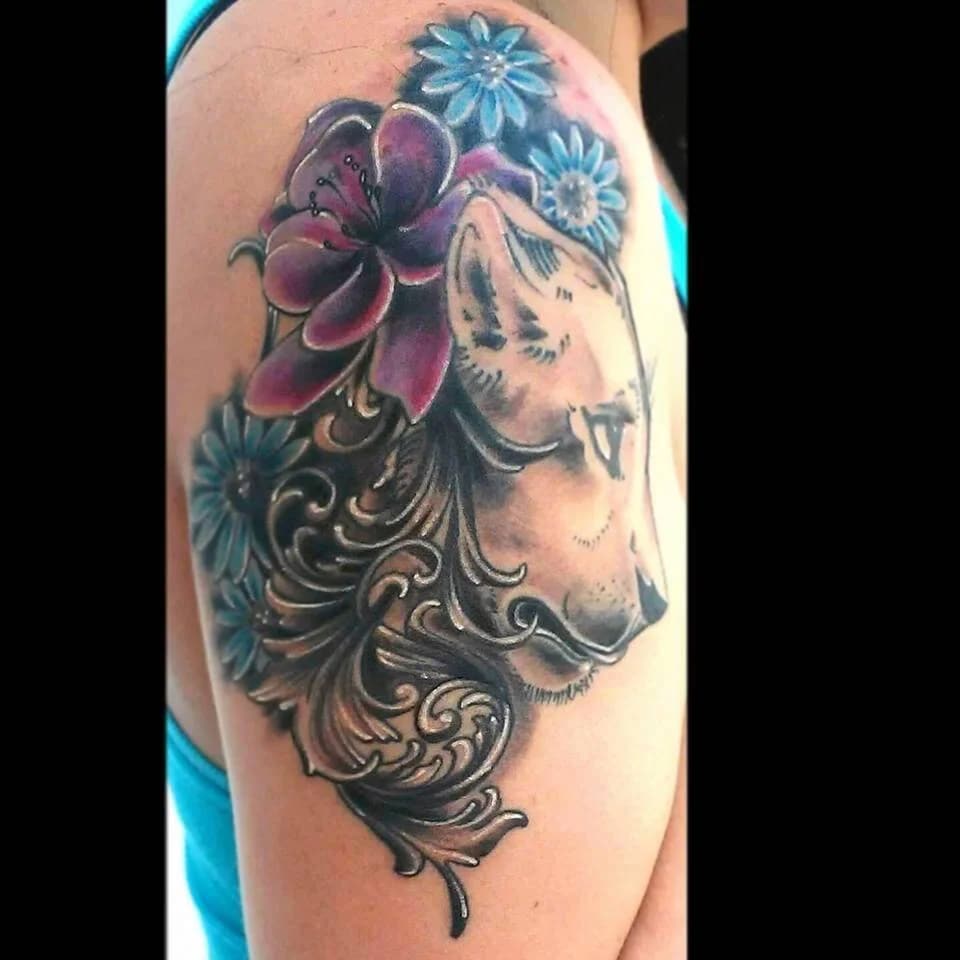
Most-requested subject matter for covering a name, a symbol, or a small piece of regret. Florals scale to any size, and their layered petals and leaves give an artist somewhere to put shadow, which is what actually does the covering. Big cats, moths, snakes, and birds run on the same principle: organic shapes with room for heavy black and deep shading, and no straight lines that have to line up with anything underneath.
Scar and Multiple-Tattoo Coverage
Several old tattoos in one area can often be handled as a single project instead of a series of patches, which usually beats covering each one separately. Scar tissue is its own conversation. Fully healed, flat scars can often take ink, though the texture may still show and color may sit differently across it. Raised or recent scarring needs more time and an honest look before anyone commits to a design.
What Usually Does Not Cover Well
Fine line, watercolor, minimalist, and single-needle work simply don’t lay down enough pigment to bury anything, so the old tattoo reads straight through them. Realism is a harder case than it looks, since it depends on soft value shifts and light areas. Sometimes those styles become possible after laser lightening. If someone promises you a delicate cover-up over a solid black tattoo, be skeptical.
Cover-Up vs. Laser Tattoo Removal: Which Is Right for You?
These two get framed as competing options when they’re often the same plan at different stages.
Full laser removal makes sense when you want the tattoo gone and nothing in its place. Plan on multiple sessions spaced weeks apart, a process measured in months to a couple of years depending on ink colors, placement, and how your skin responds.
A direct cover-up solves it with one design on a much shorter timeline. You end up with art instead of blank skin.
Partial laser lightening is the middle path, and the one people underuse. A few sessions to knock down density can open up options that were off the table completely: lighter color palettes, more detail, a smaller design footprint. If your consultation points that direction, we’ll say so and design around the result once your skin has recovered.
How the Cover-Up Process Works at Enigma

Here’s how a tattoo cover-up works here. Walk-ins are welcome for most of what we do, but a cover-up is the one service we ask you to start with a consultation, because guessing at it is how people end up with a second tattoo they regret.
- Free consultation. Come by, show us the tattoo in person, and tell us what you want instead. Photos help, but skin is three-dimensional, and we need to see saturation, texture, and how the piece sits on your body. It’s free, and you don’t have to book anything before you leave.
- Design. Your artist drafts a custom piece built around the coverage problem, not stock artwork adapted after the fact. You’ll see the design and talk through size, placement, and style before anything gets scheduled. Changes at this stage are normal and expected.
- Laser lightening, if it would help. Some pieces get much better with a few lightening sessions first. We’ll tell you that up front rather than take a booking we don’t believe in.
- Your session, or sessions. Before a needle touches the skin, the stencil goes on and you check it in the mirror. Move it, resize it, sleep on it. Larger and heavily saturated cover-ups often take more than one sitting, and we map that out with you in advance so there are no surprises. Every session runs on the same clean setup and hospital-grade sterilization as any other tattoo we do.
- Healing and aftercare. You leave with clear instructions and a straight answer about what normal healing looks like. If something feels off, call us or come in. Most of the time it’s normal, and we’d rather look at it than have you sitting at home worrying.
One thing worth knowing going in: cover-ups can take longer in the chair than a fresh tattoo of the same size, because the artist is packing more ink into the same area. Makes sense, right? Plan for a longer sitting and eat something beforehand.
Cover-Up Tattoo
FAQs
Can any tattoo be covered up?
Almost any tattoo can be covered by something. What it can be covered with is the part that varies, and that depends on how dark and dense the original is, how much room we’ve got to work with, and the condition of the skin. An artist can usually tell you within a few minutes of seeing it in person.
How much bigger does a new tattoo need to be to cover an old one?
Figure on two to three times the area of the original as a working rule. That extra space lets a design wrap the old shapes and break up their outlines instead of just sitting on top of them. Every so often a same-size cover-up works, usually when the original is small, faded, and light.
Do I need laser removal before getting a cover-up?
Most people don’t. Laser lightening comes up when the existing tattoo is very dark or dense, or when you want a design that needs light areas and fine detail to read properly. A handful of sessions is often enough, and full removal is rarely the goal.
What tattoo styles cover old ink the best?
Blackwork, blackout, American traditional, neo-traditional, Japanese traditional, and tribal all cover well, because each one relies on heavy saturation and bold shapes. Anything built on light color, soft shading, or thin lines struggles. Organic, irregular subject matter also gives an artist more to hide behind than strict geometric designs do.
Does a cover-up tattoo hurt more than a regular tattoo?
The needle feels the same, but the work tends to be more concentrated, so a given patch of skin gets gone over more times. Most people describe it as similar pain stretched over a longer session rather than sharper pain. Scarred areas can be more sensitive than the skin around them.
How much does a tattoo cover-up cost in St. Louis?
Cost depends on size, placement, how much coverage the old tattoo demands, and how many sessions it takes. Your artist walks you through the number before any work begins, so nothing comes as a surprise.
Get Your Tattoo Cover-Up at Enigma
Nobody should have to explain a tattoo they regret to someone who makes them feel stupid about it. We’ve heard every version of the story, and none of them are interesting to us. What’s interesting is what ends up on your skin afterward: a piece with its own composition and weight, one that reads as art instead of a patch job, where the old tattoo isn’t the first thing anybody sees. That’s what a cover-up should look like when it’s finished.

Book Your Free Cover-Up Consultation
Come see us in the Delmar Loop.
…and bring in the tattoo you’re done looking at. We’ll tell you straight what it can become.